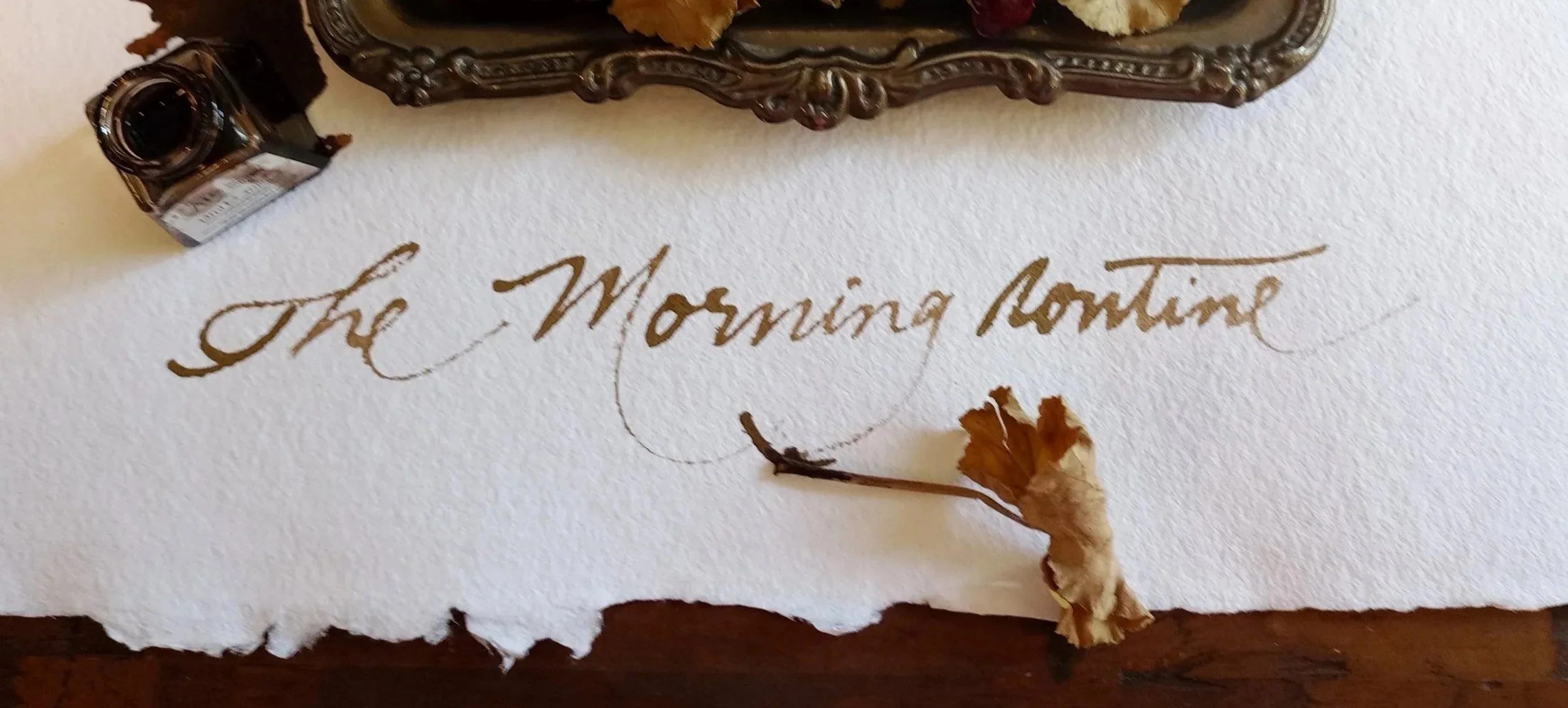
Regulated Creativity: Sensory Art & Calligraphy
Sensory Strategies in Practice
We transform art mediums into therapeutic instruments and classroom setups into sensory-friendly workspaces. Live Classroom & Home Adaptations
Your workshop table is designed to model a highly organized, sensory-friendly workspace you can easily recreate:
DIY Slant Boards We prop up drawing boards at a 20-degree angle using standard three-ring binders. We demonstrate how this slight elevation improves wrist extension, which is crucial for early writers.
Sensory "Baskets" Each table includes a small basket of non-disruptive fidgets (such as kneaded erasers, smooth stones, or textured paper scraps) that aid focus without distraction.
Visual Timers We use a large, colored visual countdown timer for all art exercises. Educators will immediately recognize this as a top-tier transition tool for anxious children.
Art as an Emotional Thermostat
Different art supplies change a child's mood or energy level. Learn to match the medium to the child's current nervous system state.
Nervous System State - Mediums
To Calm an Over-Stimulated Child (High Energy / Anxious)
Smooth walnut ink, flowing gouache, or watercolor washes.
To Alert a Lethargic Child (Low Energy / Sluggish) High-friction charcoal, scratching scratchboards, or textured sponge painting.
Nervous System State - Action
To Calm an Over-Stimulated Child (High Energy / Anxious) Rhythmic, repetitive strokes on smooth paper. Slow, predictable movements.
To Alert a Lethargic Child (Low Energy / Sluggish) Resisting pulling forces, painting on a vertical surface. Heavy tactile and resistive feedback.
Nervous System State - Why
To Calm an Over-Stimulated Child (High Energy / Anxious) Encourages deep, rhythmic breathing and a lower heart rate.
To Alert a Lethargic Child (Low Energy / Sluggish) Wakes up the brain and muscle receptors (proprioception).
The Workshop Experience: Regulated Creativity
Our standard 2-hour workshop, "Regulated Creativity: Sensory Art & Calligraphy," is built around direct, hands-on learning to improve fine motor skills and nervous system regulation.
Phase 1: Environmental Setup
Duration: 15 Mins Before
Activities: Seating alternates standard chairs with wobble cushions. DIY slant boards and Sensory Baskets ready. Low-tempo ambient music.
Phase 2: The Experiential Hook
Duration: 20 Mins
Activities: Welcome & The Grip Experiment (thin pen vs. weighted pen). Discussion connecting hand fatigue to spatial awareness struggles.
Phase 3: Core Techniques
Duration: 60 Mins
Activities: Vertical Plane Painting Large, fluid strokes on walls to engage the shoulder and core (postural control). Vestibular Reset Quick standing sequence (shoulder rolls, deep hand presses). Slow-Strokes Calligraphy Seated, rhythmic downstrokes with smooth ink, emphasizing matching the stroke to the breath.
Phase 4: Application & Wrap-Up
Duration: 20 Mins
Activities: Brainstorming Session Participants identify one child/student they struggle with and select one tool from the session to try. Distribution of the Take-Home Handout.